Electrical Equipment: Start With the System, Not the Accessory
Electrical is a broad project category. The right page to shop depends on what the equipment must distribute, contain, generate, route, or process. Begin with voltage, current, phase, conductor or cable type, environmental exposure, and the rules that apply at the installation site. Product dimensions and feature lists come after those system requirements.
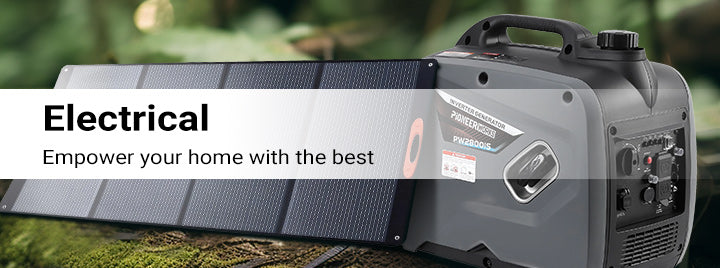
Use Electrical Boxes, Panels & Fittings for housings and distribution hardware, Electrical Tools for installation and processing work, Generators for power-source options, and Wire, Cable & Conduit for routing and conductor protection.
Use the Job to Set the Specification
Write down the connected equipment, normal and starting load, supply, operating environment, duty cycle, and available working space. For enclosures and panels, verify the listed environmental rating and usable dimensions. For a powered tool, compare input power, material range, feed method, guarding, adjustments, and duty rather than relying on a generic “industrial” label.
| Shopping task | Primary checks | Common miss |
|---|---|---|
| Contain or distribute power | Voltage/current, enclosure type, entries, internal space, mounting | Choosing by outside dimensions only |
| Route cable or conduit | Material, diameter, bend/support needs, location rating | Mixing incompatible fittings or environments |
| Process or strip wire | Wire range, channel/blade setup, feed speed, guarding | Assuming one setup handles every insulation type |
| Provide temporary power | Load calculation, outlets, fuel/source, transfer method | Ignoring starting load or connection requirements |
Read Item-Level Specifications Carefully
Even products in the same subcategory can serve different workloads. GARVEE wire strippers, for example, include a five-channel model with a listed 1.5–25 mm range, a 10-channel model with a listed 1.5–38 mm range, and an 11-channel dual-mode model. Those figures describe the specific listings; they do not make every cable equally suitable. Insulation construction, conductor condition, setup, and blade adjustment still matter.
Plan for Code, Access, and Maintenance
Electrical equipment must be suitable for its intended use and location. Keep required working space and access, protect live parts, use correctly rated conductors and overcurrent protection, and follow the National Electrical Code plus local requirements. Installation or modification should be handled by a qualified person when required.
- Do not infer NEMA, IP, UL, ETL, or other status from appearance; verify it on the item and documentation.
- Check replacement blades, fuses, filters, brushes, and other wear parts before putting equipment into a production workflow.
- Confirm whether listed capacities are maximums, recommended operating ranges, or test-condition figures.
Frequently Asked Questions
How do I choose the right electrical subcategory?
Define the job first: containment, distribution, generation, routing, measurement, or material processing. Then open the matching subcategory and filter by the system requirements.
Are IP and NEMA enclosure ratings the same?
No. They come from different systems and are not automatically interchangeable. Use the exact rating listed for the product and evaluate it against the installation environment.
Can I size electrical equipment by wattage alone?
Usually not. Voltage, current, phase, starting load, duty cycle, conductor sizing, protection, and connection method can all change the selection.
What does a wire stripper’s range tell me?
It states the listed diameter range for that model. It does not guarantee identical results across every insulation material, cable construction, or damaged wire.
When is a qualified electrician needed?
Use one whenever the work is required by law or code, involves fixed wiring or energized equipment, or exceeds your training and authorization.
What should I check when two products look nearly identical?
Compare the model number, ratings, usable capacity, included parts, adjustment range, installation method, certifications stated for that item, and current manual.