
A Comprehensive Guide to Maintaining Your Table Saw and Making the Most of Your Woodworking Equipment.
The most important tool in a woodworker's workspace is the table saw. Therefore, to maximize its effectiveness, guarantee safety, and maintain its longevity, it is essential to fully understand its anatomy.
This video is sourced from YouTube@GARVEE
Just like knowing the anatomy of a table saw, understanding how to maintain it is equally important. Regular maintenance improves cutting accuracy, improves safety, and extends the lifespan of your tool.
In this guide, we will break down the key parts of a table saw, provide actionable maintenance tips, and explain common mistakes to avoid. Make sure you follow these expert tips to ensure your saw tools stay reliable and efficient for every project.
Table of Contents
- Understanding Table Saw Anatomy
- Maintenance Tips for Peak Performance
- Why Maintenance Matters
- Dos and Don’ts in Table Saw Maintenance
Understanding Table Saw Anatomy

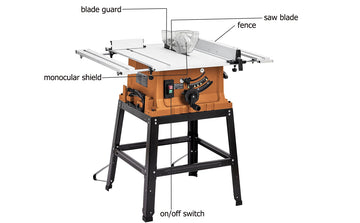
A table saw is equipment made from multiple interrelated parts for precision. Every component is essential to providing accurate cuts and ensuring user safety. Here is a breakdown of each and every part that a user must learn before putting the tool to work.
● Saw Blade
The saw blade is the soul of any table saw that determines the type and quality of the cut. It is available in various sizes and tooth types. A sharp and clean blade results in the best output and minimizes tear-outs, especially when working with hardwood or ply. Depending on your project, you might switch between rip blades, crosscut blades, or combination saw blades. A blade that is properly oriented can save both time and lives.
● Motor
The entire operation of a table saw is powered by the motor. It is stored beneath the table and is attached to the blade by a belt or direct drive mechanism. While cutting dense wood, the power of the motor allows deeper cuts and smoother operation. Regular inspection is essential to prevent power loss or overheating.
● Trunnions
Trunnions are the pivoting supports that hold the arbor and motor assembly in place. These sturdy metal brackets are in charge of adjusting the height and tilt of the blade. While misaligned trunnions might result in imprecise bevel cuts, high-quality trunnions guarantee exact control over blade location. It can exacerbate motor stress if not used appropriately.
● Table Saw Fence
Straight, consistent rip cuts can be made by following the table saw fence as a guide. A high-quality fence should lock securely and stay parallel to the blade to avoid kickback or binding. A fence that is misaligned can cause inaccurate cuts.
● Miter Gauge
A miter gauge is essential for mitered or crosscuts. It slides in the grooves of the saw table and helps guide the workpiece at precise angles. Accuracy in this component directly affects the quality of angled cuts. Without regular calibration, the gauge may not align properly with the blade.
● Dust Port
A good dust-collecting system makes cleanliness easy and shields the area from fire and health risks. It also makes the blades more visible. Sawdust and other debris produced during operation are collected via the dust port, which is connected to a vacuum system. When working, a blocked dust port can impact airflow.
● Safety Mechanisms
One must become familiar with the safety features of a table saw before using one. This feature usually has anti-kickback pawls, blade guards, and riving knives. It is especially designed to protect the user from accidents. For instance, this Garvee 10-Inch Woodworking Table Saw has a transparent blade guard for extra safety. It is important to check this mechanism occasionally to ensure 100% safety.
A properly maintained and understood machine is essential to effective woodworking, regardless of whether you are using a table saw stand, a portable table saw, or various accessories like a band saw or miter saw.
Maintenance Tips for Peak Performance

We cannot stress enough how important it is to maintain your woodworking tools properly. It is essential to ensure accurate performance, safety, and reliability over the period of time. The following are crucial maintenance guidelines that all table saw users should adhere to maintain the best possible equipment.
Clean the Surface and Internal Components
The main problem with table saws is sawdust accumulation. You need to remove sawdust, resin, and debris from the saw table as well as the motor vents and internal housing. A buildup of dust disrupts operations and might lead to fire hazards. It may also make cuts less accurate.
You can use compressed air or a shop vacuum to clear tight spaces. Additionally, if the table saw stand includes built-in storage or folding parts, wipe it down regularly and inspect for loose fittings. A firm foundation and a clean work surface make woodworking safer and more accurate.
Keeping the Saw Blade Clean and Sharp
Dirt makes the blade of a table saw dull. A dull saw blade reduces cut quality and forces the motor to work harder. Therefore, it is essential to regularly check for pitch and resin buildup. To get rid of debris, you can use a soft brush and a blade cleaner. We can also resharpen the blades in a professional way or replace them when necessary.
Additionally, we can prolong the life of each blade and keep the table saw operating efficiently by switching out the blades for rip cuts, crosscuts, or fine finishes.
Lubricating the Parts
Table saws undergo tremendous amounts of friction while operating. Thus, applying lubricant to the moving parts, such as the blade elevation screw, tilt mechanism, and trunnions, is necessary. Avoid putting too much lubricant on the table saw sled tracks or fence rails, as this can lead to slippage. Since silicone-free dry lubricants don't collect dust and dirt, they're perfect for use close to cutting areas.
Aligning the Table Saw Fence
Rough edges, binding, and backlash might result from a table saw fence that is not aligned properly. It should remain exactly parallel to the saw blade to get safe and accurate cuts. When needed, we have to measure the distance between the front and back blades of the fence. When cutting, always make sure the fence shuts down securely and does not float when pressure is applied.
Adjusting the Miter Gauge
A properly adjusted miter gauge is important to make accurate cuts. The gauge may move or develop slack in its tracks over time. You can use a square or digital angle finder to verify that the miter gauge aligns correctly with the saw blade at 0°, 45°, and other common angles. Regular inspection of the miter slots is also essential to avoid debris buildup. Additionally, we need to apply dry lubricant to maintain the smooth, controlled movement.
Inspecting and Adjusting Table Saw Sleds
A table saw sled is an essential table saw accessory for safe and accurate crosscuts. However, even high-quality sleds can lose precision with time. Thus, we need to check the runners for wear, ensure that they slide smoothly, and confirm that the fence is square to the blade. Repair or replace the sled to preserve its excellent cutting precision whenever needed.
Verifying Every Electrical Connection and Fastener
Electrical connections, nuts, and bolts that are loose can affect your performance and safety. So, we need to make sure that everything is tight and operational without any damage. Always check for fraying or exposed wiring in power cords, and repair any broken pieces right away.
Why Maintenance Matters

Investing in a table saw is a big step for any woodworker. The longevity of the tool is determined by proper cleaning and maintenance. Proper cleaning and maintenance also impact the quality of the project you are working on, as well as your health and safety. Table saws, in contrast to band saws or miter saws, mostly depend on clean surfaces and exact alignment to function efficiently.
Accurate and Consistent Cuts
The key advantage of regular maintenance is accuracy. Smooth and clean cuts can be achieved by a lean and aligned table saw fence, calibrated miter gauge, and sharp saw blade. Dust buildups result in cut burns, splinters, and inaccuracy. This is particularly apparent with angled and crosscut cuts, where any misalignment is more obvious.
Precision is much more important for people using instruments like a table saw sled. Inaccurate joinery or material waste can arise from even a small change in sled alignment. Maintaining the dependability and professionalism of your operation requires routinely inspecting your sled and sled rails.
Ensuring Safety

If there is something we can term as non-negotiable, then that is user safety. Poor maintenance of the table saw is the cause of numerous accidents that are reported each year. Chances of kickback, unstable fences, and malfunctioning need to be considered critical in these types of works. Sharp, clean saw blades minimize the chance of the blade catching or jerking the workpiece by reducing resistance and friction.
Regular inspection of safety mechanisms like the blade guard, riving knife, and anti-kickback pawls cannot be overstated. Always check the availability of spare parts before buying a tool. A range of table saws and parts are available on websites such as Garvee.
Cost-Saving Workflows
Avoid taking shortcuts when it comes to upkeep and repairs. In the long run it will only benefit you and reduce unnecessary expenses. From saw tools to table saw stands, maintaining these tools helps prevent disruptions. Replacing and repairing equipment before is always better than stopping a project midway.
Secure Accessory Produces Better Results
When the core saw components are in good condition, your table saw accessories, such as the dado stacks, outfeed extensions, and table saw sled, work at their peak efficiency. A dirty table saw fence, gummed-up tracks, or misaligned miter slots can all affect how well your work runs. A high-quality tool like this Garvee portable table saw can help ensure elevated craftsmanship.
Dos and Don’ts in Table Saw Maintenance

Amateurs as well as seasoned woodworkers sometimes overlook certain aspects of table saw maintenance. Preventing these typical errors is just as crucial as maintaining the quality of your equipment. Here is a precise dos and don’ts list for your table saw.
1. Do: Clean after every use.
Do not leave the tool sitting on debris, as dust buildup causes corrosion.
2. Do: Select the appropriate saw blade for every task.
Do not use the same blade for all materials. Use a rip, crosscut, and fine-finish blade for
the job it does.
3. Do: Regularly align the miter gauge, fence, and blade.
Do not count on the miter gauge, saw blade, and table saw fence being in alignment
over time. Alignment is impacted by wear and vibration.
4. Do: Keep the work surface and table saw stand in good condition.
Do not use a table saw stand that is unstable or uneven, as this could lead to imprecise cutting and an increased risk of harm.
5. Do: Cover your table saw.
Do not leave your table saw exposed to moisture or precipitation. Rust is caused by moisture, particularly on the blade and trunnions.
While we emphasize practice and skill, we often overlook how crucial it is to actually know the tool you are working with. In fact, a good table saw, like the Garvee Multifunctional 10 Inch Table Saw , makes the project safer and easier. Hence, taking good care of these tools goes hand in hand.
Following a routine maintenance plan and avoiding rookie mistakes gets you the most of your investment. Knowing what to buy and how that tool works, along with the knowledge of where to find spare parts, really can make a huge difference.
Keep your saw in top shape, and see how it returns the favor with every clean, precise cut.
More to read
How To Choose The Perfect Table Saw: A Comprehensive Guide


